
Whose Reality Is It?
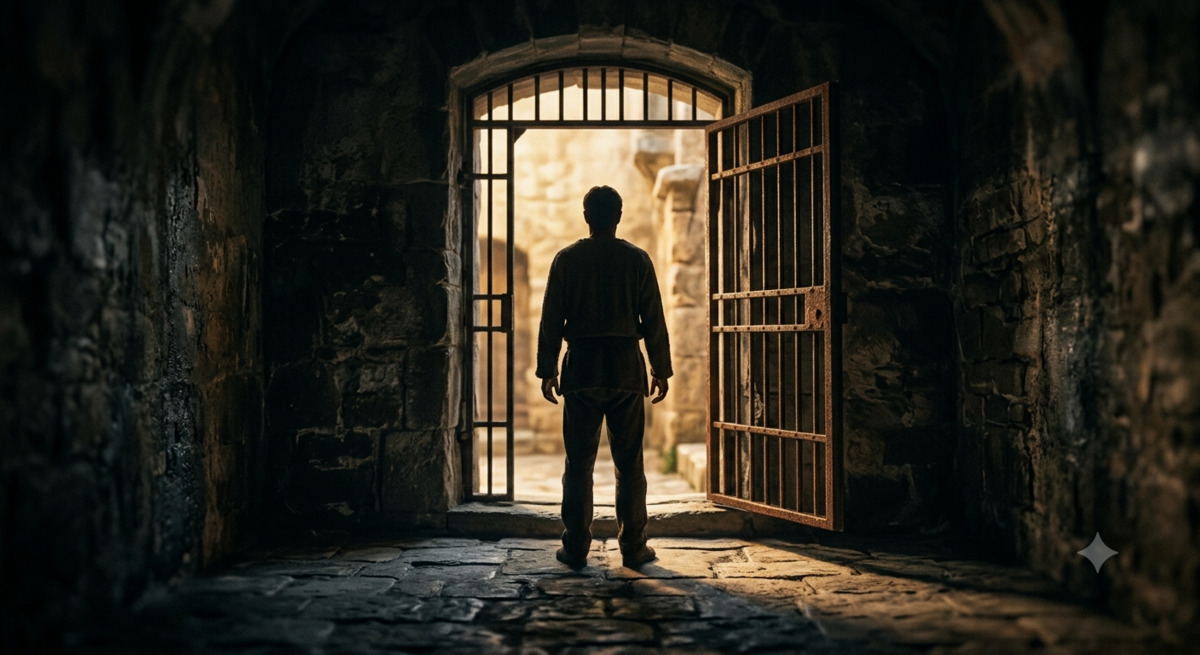
You do not need to defeat the system to be free of it. You need only see it clearly.
“Do you think that’s air you’re breathing now?”
“I’m trying to free your mind, Neo. But I can only show you the door. You’re the one that has to walk through it.”
— Morpheus, The Matrix, 1999
“I know why you’re here, Neo. I know what you’ve been doing. I know why you hardly sleep, and why night after night you sit at your computer. You’re looking for him. I know, because I was once looking for the same thing. And when he found me, he told me I wasn’t really looking for him. I was looking for an answer. It’s the question that drives us, Neo. It’s the question that brought you here. You know the question, just as I did. The answer is out there, Neo. It’s looking for you. And it will find you, if you want it to.”
— Trinity, The Matrix, 1999
PART ONE: YOU THINK THAT’S AIR?
Morpheus does not ask Neo that question to teach him chemistry. He asks it at the precise moment when Neo needs to understand something more fundamental than any fact — that his relationship to what he perceives as reality is not what he thought it was.
Neo is standing in a simulation. He knows it is a simulation. He has been told it is a simulation. And yet he is still breathing the simulated air as though it were real air, still subject to the simulated gravity as though it were real gravity, still limited by the simulated rules as though they were physical laws. The information that the world is constructed has not yet changed his relationship to the Construct. He knows it intellectually. He has not yet felt it in his body.
That is the gap Morpheus is trying to close. Not the gap between ignorance and knowledge. The gap between knowing and seeing. Between understanding a thing intellectually and having it rewire the perceptual architecture through which you experience everything.
The previous twentytwo articles in this series have been filling in the answer to Morpheus’s question as it applies to the actual world in 2026. What is actually in the air you breathe. What is actually in the food you eat. What has actually been injected into billions of people. What has actually been installed in the prefrontal architecture that generates the feeling of thinking your own thoughts. What actually happened to the children who grew up holding the phone their parents gave them before they could read. What actually runs the censorship infrastructure that the government admitted in federal discovery it considers the management of critical infrastructure — the critical infrastructure being your thoughts.
The air is not what you were told it was.
But here is the question that every reader of these last 23 articles is entitled to ask, and that most do ask, somewhere between article three and article twentytwo. All right. I understand intellectually. The nanoplastics are real. The BBB compromise is real. The curated feed is real. The prefrontal disruption is real. The question is not whether any of that is true. The question is what I am supposed to do with it. I cannot stop breathing. I cannot un-receive what was injected. I cannot unwatch the years of screen content that shaped what I think I remember. I cannot un-eat the processed food. So what is the point of knowing?
That question is the splinter. And it is the most important thing in this article.
PART TWO: THE SPLINTER
Philip K. Dick described it in 1977 as something like a splinter in your mind — a persistent, low-level dissonance between what you are told is happening and what you observe actually happening. It drives you mad precisely because you cannot locate it. You feel that something is wrong. You cannot say what. The explanation you have been given almost fits. But not quite. And the almost is the thing that will not let you sleep.
Trinity recognized it in Neo before he could articulate it himself. She did not tell him what the answer was. She told him he already knew the question. And that the question was the thing that had been driving him all along — not toward any particular destination but toward the moment when the question would become conscious enough to be asked directly.
Most people never reach that moment. Not because they are incapable of it. Because the substrate that was installed was designed specifically to quiet the splinter. To fill the human context window — the active working memory of daily attention — so completely with trivialities, urgencies, dopamine spikes, and algorithmically curated content that the question never has room to form clearly enough to be asked.
The phone does not give you the question. It gives you everything except the question.
Proust understood this in a different context. He spent 4,000 pages documenting the way daily life — habit, social obligation, ambition, distraction — pushes the most important parts of the self out of the active window. Not destroys them. Pushes them out. They are still there. Waiting. Accessible only through what he called involuntary memory — the taste of a madeleine dipped in tea, the feel of uneven cobblestones underfoot — sensory triggers that bypass the constructed self entirely and deliver direct contact with what was always real.
The involuntary memory cannot be installed by any system. It arrives through the body. Through actual physical experience in the actual physical world. And it carries with it the undeniable weight of the real. You cannot argue with it. You cannot fact-check it. You cannot algorithmically suppress it. It simply arrives and says: you were here before any of this. You were real before any of this. And you are still real now.
That is the door that Morpheus said he could only show you. The one you have to walk through yourself.
PART THREE: THE DOOR AND HOW TO FIND IT
The perceptual revolution is not a protocol. It is not a list of instructions. It does not require a detox regimen or a dietary change or a specific intellectual framework. It requires one thing only — the willingness to sit with the question long enough to let it ask itself.
What is actually happening here?
Not what did they tell me is happening. Not what does the consensus say is happening. Not what does the algorithm deliver to me about what is happening. What is actually, observably, undeniably happening — and does the explanation I was given account for it honestly?
When you ask that question with genuine openness — when you are willing to let the answer be whatever it is rather than what you were taught it should be — the conventional wisdom that has been explaining the world to you since childhood becomes visible as conventional wisdom. Not truth. Not physics. A story. Chosen and maintained by people with interests in its maintenance.
The moment the story becomes visible as a story, it loses its primary power. Not its material power — the nanoplastics are still in the air, the CBDC architecture is still being built, the 82nd Airborne is still deploying. But its perceptual power — its ability to prevent the question from forming, to make the rules feel like gravity rather than code — that dissolves.
You do not need to defeat the system to be free of it. You need only see it clearly.
Morpheus could show Neo the door because Neo already had the splinter. The question had already been forming for years, driving him to sit at his computer night after night. All Morpheus did was give the question a name and a direction.
The twentytwo articles before this one were attempting the same thing for the reader who already has the splinter. Who already feels that the explanation does not quite fit. Who already knows, somewhere beneath the noise of the feed and the habit of compliance, that things are not as they teach us.
If you have read this far, you already have the question. You have had it for longer than you know. The answer has been looking for you.
PART FOUR: REMAKE THE WORLD
What happens when Neo realizes he is not breathing air?
Morpheus does not ask Neo that question to produce despair. He does not ask it so that Neo will understand the hopelessness of his situation — that the air is fake, the gravity is fake, the rules are fake, and there is nothing to be done about it. He asks it at the precise moment when Neo is about to learn to fly.
The realization that the air is an illusion is not the destination. It is the mechanism. Because the moment Neo genuinely understands that the air is code — not intellectually but in his body, in the rewired architecture of his perception — the rules that governed what his body could do inside the simulation ceased to apply. He could not have flown before that moment. Not because he lacked the physical capacity. Because he believed the rules were physics. Once he knew they were code, the code could be rewritten.
This is the step that every account of perceptual revolution tends to omit. The liberation is not in the seeing. The liberation is in what the seeing makes possible.
This is not a small distinction. It is the entire point.
The nanoplastics are in the air. The BBB has been compromised. The feed has been curated. The prefrontal architecture has been disrupted. None of that is reversed by the perceptual revolution. The material substrate remains exactly as Borgified Humanity and The Inner Prison documented it.
But the world that was built on top of that substrate — the world of managed consent, manufactured compliance, curated reality, and the ongoing story that things are as they teach us and resistance is futile — that world is made of code. And code requires your belief in its rules to function as physics.
The moment you see it as code, you are no longer subject to its physics.
Not because you have defeated the system. Not because the system has changed. Because your relationship to the system has changed in the only way that actually matters — you have stopped providing the one thing it cannot manufacture for itself.
Your voluntary compliance.
The system can install nanoplastics without your consent. It cannot make you believe the story without your participation. The participation is the load-bearing wall. Remove it and the architecture that was maintained by your belief begins to dissolve.
This is why the series is called Dissolution.
Not the destruction of the system. The dissolution of its claim on the mind that has seen through it. Neo did not destroy the Matrix by realizing the air was code. He dissolved its ability to constrain him. The Matrix continued to exist. It simply lost its rule over the person who had seen it clearly.
That is what is available to you right now.
Not the overthrow of anything. Not the defeat of any enemy. Not the solution to the nanoplastic problem or the CBDC architecture or the 82nd Airborne or any of the other material realities documented in this series.
The dissolution of the story’s claim on your mind.
Which is the only thing that was ever keeping you from remaking your world.
Neo is the Latin root for New.
Remake the world anew.
CLOSING: THE SKY
“Many years ago, I climbed the mountains, even though it is forbidden. Things are not as they teach us; the world is hollow, and I have touched the sky.”
— Star Trek, Season 3, Episode 8
I had my own Neo moment of realization many years ago, at the tender age of 16.
I had grown up accepting the myriad disjointed, superficial, and contradictory excuses people gave for their behavior. “That’s just the way it is.” I had just read E.O. Wilson’s Sociobiology: A New Synthesis and Richard Dawkins’ The Selfish Gene. I understood the facts and perspective intellectually. For a brief while that conventional wisdom about human behavior and this new perspective swirled around each other, banging head on, and suddenly — “you think that’s air you’re breathing?” — a sudden burst of clarity about what it really meant. How it explained everything. I was literally knocked out and when I came to, the world had changed, as if my brain had been rewired.
That is what the perceptual revolution feels like from the inside. Not gradual. Not comfortable. Discontinuous. A before and an after, with a gap in between where the rewiring happened. The conventional wisdom did not disappear. The world did not change. But my relationship to the conventional wisdom changed permanently and irreversibly. It had been visible as truth. It became visible as story. And once visible as story, it could never again constrain perception the way it had before.
When the story that had been explaining the world became visible as just a story — it did not simply produce a more accurate picture of the world. It produced the recognition that the world the story was maintaining required my participation to persist. The compliance was not gravity. It was a choice I had been making without knowing I was making it. And choices can be unmade.
Sociobiology was my madeleine. For someone else it will be something entirely different. A conversation. A book. A moment of silence long enough for the splinter to speak. A walk outside without the phone. Whatever creates the gap in the noise through which the question can finally form clearly enough to be heard.
The mountains were always climbable. The sky was always touchable. The teaching that it was forbidden was always just a teaching.
The perceptual revolution does not return you to who you were before. It makes you new. The person who walked into the question and the person who walks out of it are not quite the same person. The rules you thought were physics turn out to be code. The compliance that felt like gravity turns out to be a story you were telling yourself. The world that was pulled over your eyes turns out to be a world that requires your ongoing participation to maintain.
You do not have to keep participating.
The solution to nanoplastics in the brain is ironically the brain’s own plasticity. The brain is entirely capable of rewiring around it. You just need to give it what it needs – real experience, contact, questions, & madeleine’s.
The world is hollow.
The sky is right there.
Climb.
Grant me the serenity to accept the things I cannot change, the courage to change the things I can, and the wisdom to know the difference.
– Reinhold Niebuhr, 1932
Leave a Reply