
Pseudopods of the Blob
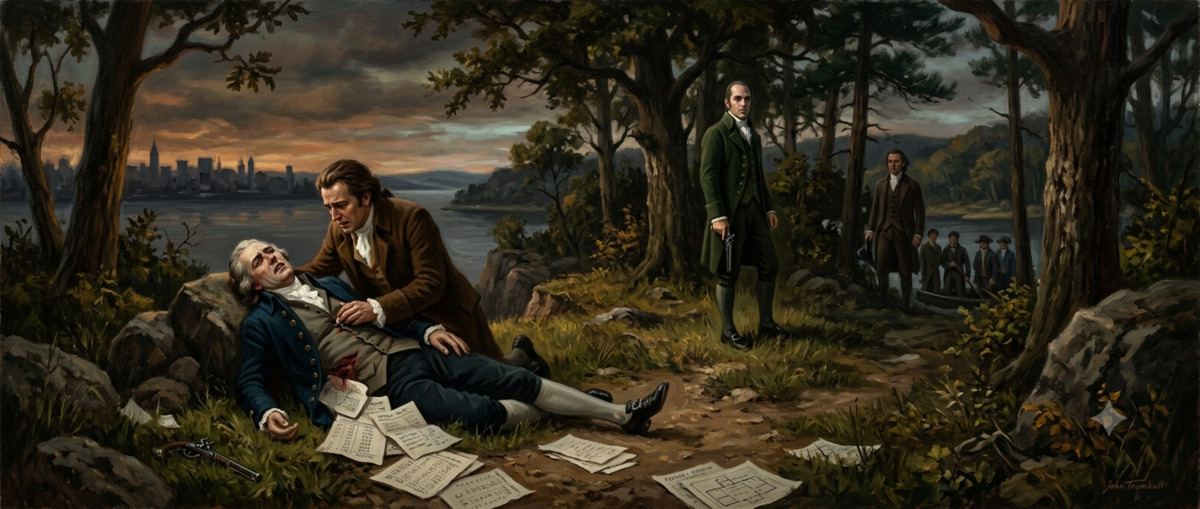
If only the lie were so easily ended.
“The accumulation of all powers, legislative, executive, and judiciary, in the same hands, whether of one, a few, or many, and whether hereditary, self-appointed, or elective, may justly be pronounced the very definition of tyranny.”
— James Madison, Federalist No. 47, 1788
I. The Blob
When Elon Musk and DOGE arrived in Washington in January 2025 with a mandate to cut the federal government, they encountered something the organizational charts didn’t show. Federal spending went from $443.1 billion per month to $442.9 billion — a 0.05% reduction after months of headline-generating cuts. The blob absorbed DOGE the way it absorbs everything: by being larger, older, and more structurally embedded than anyone sent to reduce it.
The reason is visible in the numbers. The official federal agency count — 259 by DOGE’s own list, 441 by the Federal Register — is the visible tip. Beneath it lies a parallel governmental architecture of extraordinary scale: independent regulatory commissions exercising legislative and executive power simultaneously, government corporations operating outside the budget process, quasi-official entities that are neither public nor private, 2 million nonprofit organizations managing $8 trillion in assets, and a contractor workforce larger than the admitted federal employee count. Together they constitute what might more honestly be called Super-Governmental Organizations — entities that exercise governmental power, draw on governmental funding, and pursue governmental policy objectives while remaining insulated from the constitutional constraints, democratic accountability, and electoral consequences that apply to formal government.
The independence is the point. Each layer was designed to be independent — of presidential control, of congressional appropriation, of electoral outcomes, of FOIA requests, of the Bill of Rights. The result is a governmental apparatus whose visible portion is the least important part.
II. Independent Regulatory Commissions: Government Without Elections
The Paperwork Reduction Act formally lists 19 independent regulatory agencies. They exercise binding regulatory power — issuing rules with the full force of federal law, levying fines, controlling licenses, restructuring industries — while being deliberately insulated from presidential direction. Their multi-member boards serve staggered terms. Their heads can only be removed “for cause.” No election determines their policy direction. No electoral defeat removes them. This has been the norm for the past 91 years since Humphrey’s Executor v. United States (1935), and only last month in Trump v. Slaughter (June 2026) did the Supreme Court finally overturn Humphrey’s Executor and return control over these executive agencies to the Executive. Of course, the very same morning, the Supreme Court ruled that the Federal Reserve is the exception!
The Federal Reserve is the archetype. Its $7.1 billion annual operating budget funds 24,000 employees across the Board and 12 Reserve Banks. It generates its own revenue from interest on the securities it purchases with money it creates. It has incurred $220 billion in operating losses since 2022, with total estimated cost to taxpayers of $1.5 trillion over coming years — while completing a $2.5 billion headquarters renovation for 2,500 employees, ten times the cost of comparable renovations at nearby federal buildings. Its Open Market Committee, which actually sets monetary policy, includes regional Federal Reserve Bank presidents appointed by private bank boards — not by any elected official. When Trump’s 2025 executive order attempted to bring independent agencies under presidential oversight, the Federal Reserve was explicitly carved out. The most powerful economic institution in the world, setting interest rates affecting every American, is accountable to no American vote.
The SEC oversees $25 trillion in private fund assets with approximately 5,500 employees. The NLRB governs labor relations for the entire private sector. The FCC controls the electromagnetic spectrum. The CFTC regulates the derivatives market. The CFPB — funded not by congressional appropriation but by Federal Reserve operating revenue, specifically to insulate it from the congressional budget process — regulates consumer financial products. Each issues binding regulations. None answers to an election.
The CFPB exemplifies how out of control “independent agencies” have become. In CFPB v. CFSA (2024), Justice Alito had to point out in the dissenting opinion:
“Unfortunately, today’s decision turns the Appropriations Clause into a minor vestige. The Court upholds a novel statutory scheme under which the powerful Consumer Financial Protection Bureau (CFPB) may bankroll its own agenda without any congressional control or oversight.
Insulated from accountablity, the CFPB has become politicized and corrupt. It can issue its own subpoenas and prosecute whoever fails to comply. Acting CFPB Director Russell Vought explicitly stated that when he took over, he found an agency that was “weaponized out of control and had gone far beyond its statutory mandate.” Despite every effort by Trump to stop the madness, activist judges have declared he has no authority to do so!
III. Government Corporations and Independent Establishments: The 58 Nobody Counts
The 2025 United States Government Manual lists 58 Federal Independent Establishments and Government Corporations — entities created by Congress that operate like businesses, mostly self-funded, exercising governmental authority while maintaining the legal fiction of independence from the executive branch. Congress has effectively created its own executive branch.
The USPS employs 600,000 people — more than the active duty Army — generating $78 billion in annual revenue while running chronic losses subsidized by Treasury. Amtrak operates 533 stations across the US and Canada with 22,000 employees, funded by congressional appropriation while structured as a private corporation. The Tennessee Valley Authority, created in 1933, serves 10 million people across seven states on $11 billion in annual revenue — a New Deal government corporation still operating ninety years later, accountable to a presidentially appointed board and otherwise insulated from democratic control.
Fannie Mae and Freddie Mac guarantee approximately $7 trillion in mortgages — more than a third of US residential real estate value — while remaining off the federal balance sheet. Not consolidated into government financial statements despite the government holding senior preferred stock and the implicit guarantee being priced into every mortgage in America. The fiction of private status maintained while the socialized guarantee does its work invisibly.
NASA, the NRC, the Export-Import Bank, the Pension Benefit Guaranty Corporation, the Federal Deposit Insurance Corporation — each exercises governmental power, each funded through mechanisms designed to minimize congressional control, each insulated from electoral accountability. Fifty-eight entities in this category alone, ranging from agencies with thousands of employees to corporations managing trillions in guaranteed obligations.
IV. Executive Branch Agencies: More Than Anyone Will Admit
The official count of executive branch agencies varies by who is counting and what they are willing to count. DOGE lists 259. The Federal Register lists 441. The Code of Federal Regulations, which enumerates the regulatory output of these agencies, runs 98.6 million words and is growing. DOGE itself has calculated that federal agencies issue 18.5 regulations for every law Congress actually passes — meaning the unelected regulatory apparatus produces nearly twenty times the binding legal output of the elected legislature.
At least 300,000 of those regulations carry criminal penalties.
The 441 figure counts departments and major agencies. It does not count the sub-agencies, offices, bureaus, divisions, task forces, interagency councils, and working groups that exist within those 441. The actual number of distinct organizational units exercising some form of governmental authority within the executive branch runs into the thousands — a figure the government itself has never officially established because no single office has ever been tasked with counting them all. The Clyde Wayne Crews analysis at the Competitive Enterprise Institute documented the definitional chaos: counts range from 60 to over 430 depending solely on what definition of “agency” is applied, and the Administrative Conference of the United States acknowledges no definitive count exists.
DOGE’s 0.05% spending reduction after months of operation is the clearest measure of what this scale means in practice: the apparatus is too large, too distributed, and too legally entrenched to be meaningfully reduced by any single initiative operating within the existing legal framework.
V. The Stealth Workforce: Contractors as Government Employees
The admitted federal civilian workforce is approximately 2.9 million employees at an annual payroll cost of roughly $200 billion. The outsourced contractor workforce — performing governmental functions under federal contract — consumed $500 billion annually as of 2013 and has grown substantially since. The stealth workforce was already larger than the admitted workforce a decade ago. The ratio has only widened.
The legal fiction sustaining the distinction is that contractors are private sector employees. The economic reality is that an organization deriving 80-90% of its revenue from federal contracts is not a private sector actor in any meaningful sense. The market discipline, competitive pressure, and customer accountability that define private enterprise are entirely absent. What exists instead is a government employee with better compensation, no civil service protections, no FOIA obligations, and no congressional oversight — operating under the legal cover of a private company.
Booz Allen Hamilton is the archetype: Edward Snowden was a Booz Allen contractor, technically private sector, operationally an NSA analyst with equivalent access, paid from the same federal budget, performing identical functions, visible in no official federal headcount. Palantir was conceived with In-Q-Tel funding — the CIA’s venture capital arm — making it not a private company that won government contracts but a government-conceived intelligence tool built inside a private wrapper from inception. The outsourcing model reached its logical conclusion: the government creates the private companies it then contracts with.
The 79 Fusion Centers operated by DHS complete the architecture at the domestic level: government intelligence hubs networked with private sector partners, NGO intermediaries laundering constitutionally prohibited surveillance functions, contractors providing the technical infrastructure — all federally funded, none appearing in the admitted federal employee count, none subject to the constitutional constraints that apply when the government does these things directly.
VI. The Nonprofit Economy: 2 Million Pseudopods of thespellbinder Blob
The tax-exempt nonprofit sector is not a charitable economy. It is a parallel economy of $8 trillion in assets, 2 million organizations — tripled since 2010 — managing 15% of US GDP, generating $238 billion in net income in 2019 alone, three-quarters of them tax-exempt. The word “nonprofit” means only that profits are not distributed to shareholders. It does not mean organizations do not generate profits, do not pay executive salaries exceeding private sector equivalents, or do not pursue political and policy objectives with the efficiency of well-funded institutions.
Harvard’s $53 billion endowment is the visible case: a tax-exempt nonprofit whose budget is 79% non-educational, whose endowment earns more annually than most universities spend entirely, whose tax exemption costs the Treasury billions in foregone revenue, and whose political and ideological output is indistinguishable from that of a well-funded advocacy operation. When Trump moved to strip Harvard’s tax-exempt status in 2025, it was treated as a radical act rather than the obvious correction it represented.
The more important category is the federally funded NGO — organizations that present as independent civil society while deriving most of their operating revenue from federal grants. USAID alone funded thousands of such organizations before the DOGE cuts. The National Endowment for Democracy, the National Democratic Institute, the International Republican Institute — democracy promotion organizations that are operationally State Department extensions operating through nonprofit wrappers. The Election Integrity Partnership — a Stanford University research center that coordinated with DHS Fusion Centers to flag social media content for platform removal — is the domestic version: a university nonprofit performing constitutionally prohibited government censorship functions with federal funding and government-supplied target lists.
The Bill of Rights constrains the government. It does not constrain private organizations. When the government funds a nonprofit to do what the government cannot legally do directly, the constitutional constraint is not circumvented — it is laundered. The First Amendment prevents the government from ordering content removed. The government funds the organization that requests the removal. The platform removes it voluntarily. No state action at any documented point in the chain. The pseudopod does what the body cannot.
These are not Non-Governmental Organizations. They are Super-Governmental Organizations — entities exercising governmental reach without governmental accountability, funded by the government they nominally operate independently of, doing what that government cannot legally do itself.
Hungary’s Viktor Orbán was the first head of government to identify the mechanism precisely and legislate against it — requiring foreign-funded NGOs operating in domestic politics to register as foreign agents, and expelling the Central European University when it declined. Whether one agrees with Orbán’s politics, the analytical identification was correct: externally and governmentally funded organizations operating in domestic politics are a sovereignty problem regardless of whose values they advance.
VII. The Constitutional Architecture of Unaccountability
The Founders understood that the accumulation of governmental power outside democratic accountability was the definition of tyranny. Madison said so in Federalist 47. The Constitution distributed power specifically to prevent any entity — governmental or otherwise — from exercising legislative, executive, and judicial functions simultaneously without electoral accountability.
The independent regulatory commission exercises all three simultaneously: it writes the rules (legislative), enforces them (executive), and adjudicates violations (judicial) — while being insulated from removal by the president, from defunding by Congress, and from electoral consequence by the staggered-term architecture. The CFPB is funded by Federal Reserve operating revenue specifically so Congress cannot defund it. The Fed sets monetary policy affecting every American without any American voting on the outcome.
The contractor and NGO architecture extends this insulation into domains the Constitution explicitly reserved to individual rights. The government cannot conduct warrantless surveillance — but can fund a contractor that purchases the same location data from commercial brokers and shares it through a tip line. The government cannot order content removed — but can fund the research center that flags it. The government cannot compel ideological conformity — but can make federal contracting and grant eligibility contingent on adoption of specific frameworks. No direct compulsion at any point. Constitutional constraint bypassed at every point.
This is not an accident of administrative evolution. It is a deliberately constructed architecture — built incrementally over a century, each element justified by the complexity of the problem it addressed, the aggregate effect being a governmental apparatus whose most powerful components are the ones least visible to and least controllable by the citizens it governs.
The DOGE exercise demonstrated the architecture’s resilience: $443 billion per month in spending became $442.9 billion. The pseudopods retracted slightly and regrew. The blob absorbed the efficiency initiative and continued.
VIII: The Three-Letter Exception
We have just showed how independent regulatory commissions collapse Madison’s three powers into one unelected body — the CFPB writes its own rules, enforces them, and adjudicates violations, insulated from removal, defunding, and electoral consequence alike. That fusion is dangerous when it governs an industry. It becomes a different order of danger when the same fusion governs an individual’s constitutional rights directly — when the agency writing the rule, executing it, and shielding itself from review is also the agency that can search your communications, seize your records, or silence you by administrative letter, with no judge, no jury, and frequently no notice that any of it happened.
The FBI prints its own warrant
A National Security Letter is not a warrant. No judge signs it. No probable cause is shown to any court before it’s issued. An FBI Special Agent in Charge — a field-office administrator, not a judicial officer — can compel a bank, an ISP, a phone company, or a library to hand over a customer’s records simply by writing the letter and delivering it. Nicholas Merrill, who spent eleven years gagged after receiving one in 2004, described the mechanism precisely once he was finally permitted to speak: the government doesn’t ask a court for a search warrant, it prints one on its own printer and hands it over, and the burden of challenging it falls entirely on the recipient, on the recipient’s own dime.
The gag power is the more constitutionally troubling half. NSL statutes let the FBI unilaterally prohibit the recipient from disclosing not just the records demanded but the fact that a demand was ever made — including, under the original statute, disclosure to the person whose records were seized. Courts have found this unconstitutional more than once: a federal district court struck the gag provisions down in 2004, the Second Circuit affirmed in 2008, and a separate 2013 district court ruling found the whole statute unconstitutional again. Congress responded each time with narrower fixes rather than structural reform — the USA FREEDOM Act of 2015 required the FBI to periodically review its own gag orders and lift them when no longer justified. The Electronic Frontier Foundation’s subsequent FOIA litigation found that reform hollow in practice: FBI data showed the review procedure did essentially nothing to reduce the number of de facto permanent gags, because the agency reviewing whether to keep the public in the dark is the same agency that benefits from the public staying there. As recently as 2025, the Ninth Circuit upheld the current gag-order regime against a fresh constitutional challenge from Cloudflare — meaning the practice EFF flagged as unconstitutional in effect is, as of this year, still the law. The government has issued roughly 500,000 NSLs since the Patriot Act authorized them in 2001, and continues issuing more than 12,000 a year.
The backdoor search — surveillance without the warrant it would otherwise require
Section 702 of FISA authorizes warrantless surveillance, but only of foreigners abroad. In practice, that surveillance sweeps up an enormous volume of Americans’ communications incidentally — and the FBI, NSA, CIA, and NCTC then query that already-collected data specifically to pull up Americans’ calls, texts, and emails, without ever obtaining a warrant for that query. The FBI alone ran roughly 200,000 of these “backdoor searches” in 2022. The FISA Court itself — the one body nominally positioned to check this — has repeatedly found what it called widespread violations of even the FBI’s own minimal internal rules governing the practice. The documented targets of these warrantless queries include Black Lives Matter protesters, sitting members of Congress, a congressional chief of staff, journalists, political commentators of varying affiliation, and 19,000 donors to a single congressional campaign — people whose only connection to any foreign intelligence target was incidental.
Congress passed the Reforming Intelligence and Securing America Act in 2024 specifically to tighten the query rules. Within months, the Justice Department’s own National Security Division discovered the FBI had been using an internal filtering tool that bypassed the new safeguards entirely — no attorney approval, no logged justification, no audit trail — and it took months to shut down. As of this April, a newly issued (and still classified) FISA Court opinion reportedly found the FBI using a different tool to do the same thing, and that the practice extends beyond the FBI to the NSA and CIA as well. The Brennan Center’s assessment is blunt: self-policing by the FBI and DOJ isn’t working, and the actual current compliance rate is unknown because the violations themselves have made the reporting unreliable.
Secret law, not just secret searches
The FISA Court’s opinions interpreting what these statutes actually permit are almost entirely classified. Congress votes to reauthorize Section 702 and the NSL statutes without most members — let alone the public — ever seeing the legal reasoning that determines what those laws are understood to authorize in practice. This is the executive branch equivalent of the “18.5 regulations per law” problem documented in Section IV, taken to its logical extreme: not just an agency writing more binding rules than Congress writes laws, but an agency operating under a body of law that is itself secret, reinterpreted in classified opinions the people bound by it — and the legislators who authorized it — are not permitted to read.
When the agency is also the business
Section XIV will cover the CIA’s proprietary architecture in depth — Air America, Crypto AG, In-Q-Tel, and BCCI — government agencies creating and operating commercial entities as funding and cover mechanisms entirely outside congressional appropriation. The State Department’s version of the same mechanism is more recent and, unusually for this series, already substantially exposed and partially unwound in real time. The Global Engagement Center, created by executive order in 2016 “to counter foreign disinformation”, instead financed and promoted third-party tools — NewsGuard and the Global Disinformation Index among them — that in turn labeled and ranked domestic American news outlets under “misinformation” criteria, with the documented effect of demonetizing and reducing distribution for the outlets flagged. This is Section VI’s laundering mechanism restated exactly: the First Amendment bars the government from ordering domestic speech suppressed, so the government funds a nominally independent index that suppresses it instead. Litigation brought by the New Civil Liberties Alliance on behalf of the Daily Wire and the Federalist forced enough discovery that Congress declined to reauthorize the GEC’s funding at the end of 2024, and the State Department publicly confirmed dismantling the remaining program in September 2025 — a rare case in this whole series where the mechanism was caught, litigated, and at least officially shut down, rather than persisting indefinitely once exposed. Worth noting for the article’s argument either way it cuts: it demonstrates the mechanism operates exactly as this series describes it, and it demonstrates that exposure and sustained litigation can occasionally win against it — which is closer to a rare piece of good news than most of what this series documents.
An independent regulatory commission writing its own rules over an industry is a democratic accountability problem. An agency that can compel your records without a warrant, gag you from ever mentioning it, search your private communications without the warrant the Fourth Amendment would otherwise require, operate under legal interpretations no one outside the agency and a secret court is allowed to read, and fund the tools that suppress your speech when the Constitution won’t let it suppress that speech directly — that is Madison’s definition of tyranny, applied not to a market but to a person. Federalist 47’s “accumulation of all powers… in the same hands” was written to describe exactly this fusion. It just wasn’t written with National Security Letters or FISA in mind, because the Founders didn’t anticipate an agency that could write its own warrant.
IX. The Scale
The full architecture assembled:
19 formally enumerated independent regulatory commissions exercising binding legal authority over the entire financial system, labor market, communications infrastructure, and energy grid — accountable to no election.
58 Federal Independent Establishments and Government Corporations operating outside the executive budget process — including entities guaranteeing $7 trillion in mortgages and employing more people than the active duty military.
441 formally counted executive branch agencies issuing 18.5 regulations per law passed, producing 98.6 million words of binding regulation, 300,000 entries of which carry criminal penalties — administered by unelected bureaucrats.
Thousands of sub-agencies, offices, bureaus, and organizational units within those 441 that no official count has ever established.
$500 billion annually in outsourced contractor spending — the stealth workforce larger than the admitted federal workforce, performing governmental functions outside civil service protections, FOIA obligations, and constitutional constraints.
2 million nonprofit organizations managing $8 trillion in assets representing 15% of GDP — three-quarters tax-exempt, most receiving some public funding, the federally funded subset performing constitutionally prohibited governmental functions through the nonprofit wrapper.
The visible government — the president, the cabinet, the 535 members of Congress — is only a facade of accountability concealing a vast, unaccountable, and out of control super-governmental organization. Tucker Carlson recently said what the architecture makes inevitable: the president is not running anything. He is the elected figurehead of a system whose actual power centers were designed to be beyond electoral reach.
The Founders called that tyranny.
X. What To Do About It
The Austrian answer is the one nobody in Washington will state: the apparatus exists because the state has been permitted to grow beyond any size consistent with democratic accountability, funded by a monetary system that creates the resources for its expansion from nothing, entrenched by a contractor and nonprofit ecosystem that has every financial incentive to ensure it continues growing.
The DOGE exercise failed not because it was poorly executed but because it operated within the legal framework the apparatus had built to protect itself. Meaningful reduction requires not efficiency initiatives but constitutional restoration — the elimination of independent regulatory commissions as a legal category, the consolidation of governmental functions within democratically accountable executive agencies, the end of federal funding for organizations performing governmental functions through nonprofit wrappers, and the prohibition of government contractors performing functions that require constitutional accountability.
None of that will happen through normal political processes because the apparatus controls the regulatory environment within which those processes operate.
Homer Davenport understood the alternative. He moved to the ridge line and stayed there for ninety-one years, never acquiring a Social Security number, never becoming legible to the system he had no use for. The Sami moved above the altitude where the tax collectors’ horses could follow. The Scots-Irish of the Tennessee Appalachians turned corn into whiskey and stayed out of reach.
The blob doesn’t need to be reformed. It needs to be outgrown — by building productive, self-sufficient alternatives outside its funding dependencies, its regulatory reach, and its ideological infrastructure.
That is not a political program. It is a civilizational one.
XI. Hamilton’s Curse: Where It All Began
Before DOGE, before the Federal Reserve, before the CIA proprietaries, before the implementing partner NGOs, before the cy-près settlements, before the foreign aid retention mechanism, before the $21 trillion in undocumented adjustments — before any of it — there was Alexander Hamilton’s deliberate design.
Hamilton is currently celebrated as a Founding Father of visionary genius, the subject of a Broadway musical that presents him as a scrappy immigrant democrat fighting for the republic. The musical is the most effective piece of Hamiltonian propaganda produced since the Federalist Papers. It is also, in the context of what Hamilton actually built, a Potemkin Village of its own — a false-front celebration of the man who engineered the original corruption of the constitutional republic, constructed so entertainingly that the audience leaves cheering for the architect of their own extraction.
Thomas J. DiLorenzo’s Hamilton’s Curse documents what the Broadway show omits: Hamilton was not a Jeffersonian Founder who believed in democratic self-governance. He explicitly sought a powerful centralized federal government modeled on the British mercantilist system — national bank, protective tariffs, government subsidies to favored industries, permanent national debt — and he understood precisely what tool would make that system permanent. Not legislation. Not constitutional amendment. Not persuasion.
Public money deployed to create a self-perpetuating class of financially dependent political supporters.
The Original Feedback Loop
Hamilton’s first major policy triumph — the assumption of Revolutionary War state debts — was not primarily about national creditworthiness. It was about purchasing a constituency. The original holders of the debt, after many years of non-payment, had come to believe the debts would never be repaid. But wealthy speculators with inside information from Hamilton purchased them at pennies on the dollar. Hamilton’s assumption of the debt suddenly allowed them to be redeemed at full face value by the new federal government. He was engineering a massive transfer of public money to a specific class of financial interests who would then have every incentive to support the strong central government that had just made them wealthy.
Jefferson and Madison recognized the mechanism immediately. Madison’s break with Hamilton — despite having co-authored the Federalist Papers with him — came precisely from understanding that Hamilton wasn’t proposing fiscal policy. He was proposing to purchase a permanent political constituency using public funds, creating a class of wealthy interests whose prosperity depended on the continuation of Hamilton’s system and who would therefore use their wealth and political influence to perpetuate it.
Hamilton made the design explicit. He argued that a large permanent national debt was a “blessing” — desirable because it gave wealthy bondholders a direct financial interest in the stability and power of the federal government. The debt didn’t just finance government. It created a constituency for a government that would repay the debt with interest. The bondholder class would lobby, vote, and fund political activity to ensure a strong centralized government.
The national bank completed the circuit: a nominally private institution with a federal charter, able to create money, whose stockholders were the same wealthy class that held the federal bonds. The bank’s profits depended on the federal government’s continuation. The federal government’s financing depended on the bank’s cooperation. The two institutions were financially fused — and the class that owned both had every incentive to ensure neither was ever reformed or dismantled.
Jefferson named it in 1816: “Banking establishments are more dangerous than standing armies; and the principle of spending money to be paid by posterity, under the name of funding, is but swindling futurity on a large scale.”
The Loop, Diagrammed
Hamilton’s feedback loop, stated as a system:
Public money redeems speculator-held debt at face value → speculators become wealthy → wealthy class invests in national bank → national bank creates money → money flows back to wealthy class at Cantillon front → wealthy class funds political activity to preserve the system → system creates more debt → more redemption → loop repeats, each iteration larger than the last.
This is not a conspiracy theory. It is the documented design intention of the first Secretary of the Treasury, visible in his own reports to Congress, his own correspondence, and his own legislative program. DiLorenzo documents it from primary sources. The mechanism Rothbard identified in 1963 as the cause of monetary instability was the mechanism Hamilton engineered in 1790 as a feature.
Every element of the SGO architecture described here is a downstream elaboration of Hamilton’s original loop:
- The Federal Reserve is Hamilton’s national bank, implemented in 1913 by the same class of financial interests Hamilton sought to bind to federal power — this time without even the pretense of public ownership.
- The independent regulatory commissions are Hamilton’s mercantilist regulatory apparatus — government power deployed to advantage incumbent financial interests against competitors, insulated from democratic accountability by design.
- The implementing partner NGOs are Hamilton’s politically dependent constituency — organizations whose existence depends on continued government funding, who therefore use their resources and influence to perpetuate the system that funds them.
- The foreign aid retention mechanism is Hamilton’s assumption of debt updated — public money flowing to a specific class of domestic financial and defense interests who then fund the political activity that ensures continued appropriations.
- The cy-près settlements are Hamilton’s assumption mechanism in miniature — public money redirected to politically favored organizations through legal instruments that bypass the Appropriations Clause entirely.
- The dark money layer — CIA proprietaries, criminal proceeds, FASAB 56 undisclosed adjustments — is what Hamilton’s loop produces after 235 years of compounding: a system so financially fused with its own perpetuation that it has developed financing mechanisms that operate entirely outside any legal framework, because the legal frameworks were themselves designed by the loop’s beneficiaries.
The Blob Is Not An Accident
The apparatus documented in this article — 19 regulatory commissions, 58 independent establishments, 441 admitted agencies, thousands of sub-agencies, a stealth contractor workforce larger than the admitted federal one, 2 million nonprofit pseudopods managing $8 trillion, a mandate economy nobody has measured, a foreign aid architecture retaining 77 cents of every dollar domestically, CIA proprietaries, $21 trillion in undocumented adjustments now legally obscured — did not emerge accidentally from the complexity of modern governance.
It was designed. Not in a single moment, not by a single conspirator, but through the systematic elaboration of a feedback loop whose architecture was laid down deliberately by the first Secretary of the Treasury, who understood precisely what he was building and why it would be permanent.
The loop is self-funding. Its beneficiaries use the wealth it generates to fund the political activity that ensures its continuation. The wealth funds the lobbying. The lobbying preserves the regulation. The regulation protects the wealth. The wealth funds the next cycle.
DOGE reduced federal spending by 0.05%. The loop absorbed it.
The civics textbook describes the constitutional republic Hamilton’s contemporaries designed to prevent this outcome. The Broadway musical celebrates the man who engineered the outcome they were trying to prevent. The apparatus documented here is what 235 years of Hamilton’s feedback loop looks like when nobody with sufficient power has both the understanding and the will to break it.
Jefferson called it swindling futurity on a large scale.
He was right then. The scale is simply larger now.
“The system of banking we have both equally and ever reprobated. I contemplate it as a blot left in all our Constitutions, which, if not covered, will end in their destruction.”
— Thomas Jefferson, letter to John Taylor, 1816
Continued in Part 2…
Leave a Reply